There’s an advert I see regularly on the London underground that makes a voice in my head say ‘no.’ It’s for a company that makes personalised children’s books, with the customer choosing the name and physical appearance of the story’s main character. The pitch is that the recipient of the gift sees themselves as a hero and this reinforces their sense of self-worth.
This isn’t a one-off, nor something limited to children’s literature. In Louise Willder’s book Blurb Your Enthusiasm, where she gives insights from her career in publishing, she writes about the trend of celebrity autobiographies that have a dual role as self-help books. Examples include broadcaster Fearne Cotton’s Happy: Finding joy in every day and letting go of perfect, and comedian Sarah Millican’s How to be Champion. They are books about the purported authors’ lives but mixed in are lessons and advice for the reader. It’s as though reading about someone else isn’t worth our time anymore unless it provides us explicitly signposted benefits.

Relatability sells
I’m reading a work of autofiction now where the blurb reads “This is a book about one man’s life but, somehow, about everyone else’s too.” It’s funny because it’s not at all about everyone else’s life. The narrator’s experiences are quite particular, and unrepresentative of his society. He goes through normal rites of passage such as falling in love and grieving deceased family members, but he also frequently acts outside the realm of conventional behaviour, such as when a woman he likes shows little interest in him and so he cuts up his own face with a shard of broken glass. It’s striking that the book’s marketing leant into the story’s relatability rather than the things that separate it from the everyday.
Much of the beauty of reading is in diving into the mind of someone else, and in doing so, gaining an understanding of the many ways people think, act, and experience the world, and how they’re often so different from our own.
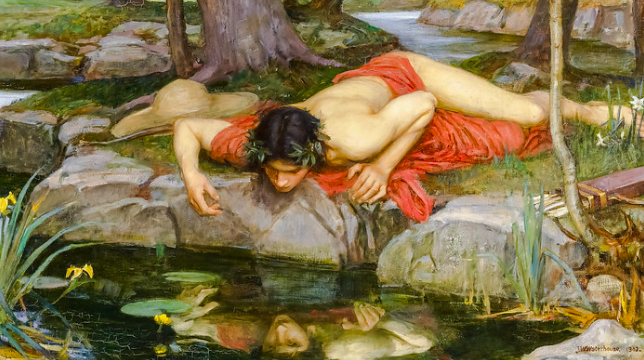
Different perspectives
The more one reads about other people’s lives (preferably from a young age), regardless of whether they’re real or imagined, or whether they’re mostly good or mostly evil according to our biases, the more one can think along the lines of: “This person/character was born in the country of A, in the year B, into a family of social class C that predominantly worked in D, E and F industries. X, Y, and Z events happened to them when they were growing up. I do/don’t agree with their behaviour, and/but I understand it.”
Successful literature (and art in general) encourages me to accept my insignificance, the minuscule space I occupy, the fact I’m just one person. There doesn’t need to be a life-changing revelation hidden in the pages that speaks to me personally, nor a code to unlock greater fulfilment or success. Occasional moments of thinking “I’m similar to the narrator/character in this regard” are rewarding, but they’re a bonus, rather than the backbone, of reading other people’s words.
 Harry Dobbs
Leave a comment