
In the Afterword to Henry Gee’s recently published The Decline and Fall of the Human Empire, Gee thanks his agent for “suggesting that such a depressing topic really ought to have a Hollywood ending”.
The “depressing topic” he writes about is mankind’s extinction. Most of the book covers arguments for this outcome to our story. Gee – palaeontologist, evolutionary biologist, and senior editor of Nature – sees humanity dying out roughly 10,000 years from now, though makes it clear he can’t say for certain.
The “Hollywood ending” he provides is the possibility of space colonisation. So, we finish on a hopeful note – maybe our species can survive for millions of years, out in space. I’m ignorant about science so can’t judge how feasible this is.
Perhaps Gee’s agent suggested the happy ending to make the book more marketable.
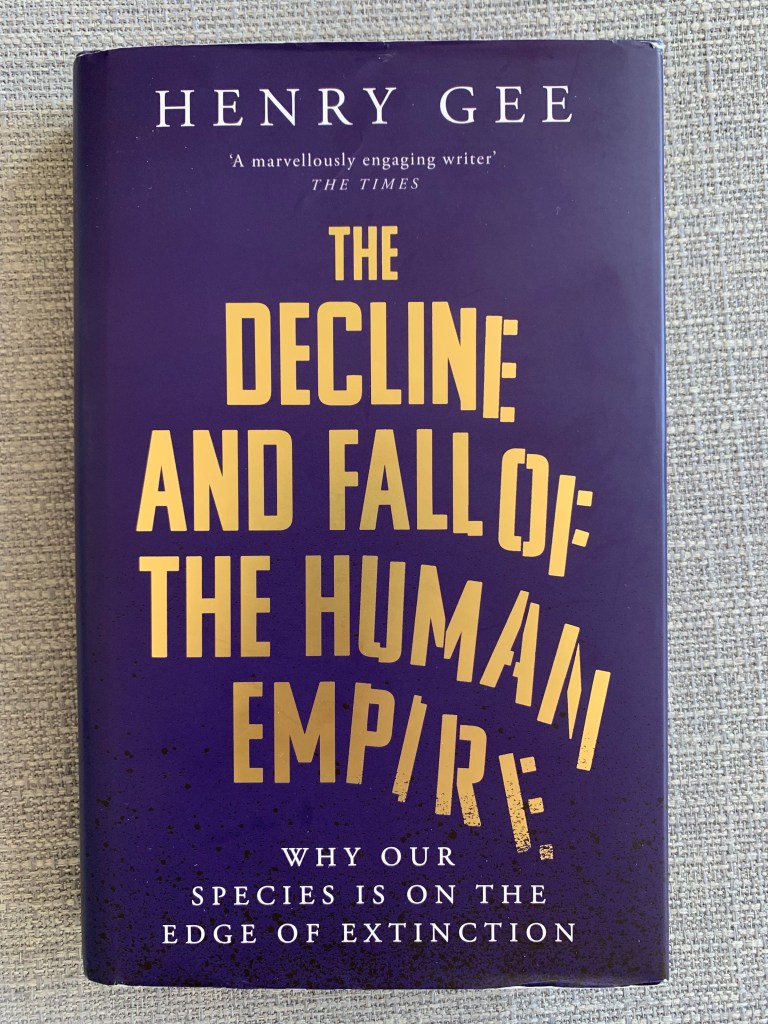
The Decline and Fall of the Human Empire
It reminds me of the famous conclusion to Ian McEwan’s novel, Atonement. We learn in the final section (‘Postscript’) that the happy ending we’ve just read is a lie invented by one of the main characters, who didn’t want to give readers a “pitiless” story.
I can think of two reasons why people don’t want pitiless stories:
- They find them insulting, in that they deviate from Christian ideals of redemption (ideals that still pervade secular society and storytelling)
- They find them too realistic. And so, such stories fail to qualify as escapism
The other day, I rewatched the Lars von Trier film Melancholia, in which protagonist Justine, a troubled art director at an advertising firm, finds peace through accepting earth’s impending annihilation. The film ends with said event, and we see the moment Justine and her family (and by extension, all of humanity) are killed.

But Lars von Trier isn’t a mainstream director, and likely never will be. Art that peddles despair or nihilism has limited appeal.
Instead, people choose intimations of eternal life. Even atheists do this, who can be fond of dwelling on the romance of our actions living on in the memories of others, and of our bodies becoming part of the earth from which new life grows.
David Mitchell’s novels (Ghostwritten and Cloud Atlas come to mind) include regular allusions to this form of atheistic immortality. They often feature characters who live decades or centuries apart, but who are influenced by their predecessors on earth through the writings, music, videos etc that have been left behind as their legacies.
Mitchell executes these ideas well, manages to avoid the tweeness that is so often present in Godless spirituality (stuff like “we’re all stars in the sky”).
In a secular society, the idea of legacy is an effective way of ensuring good behaviour among citizens. You can use warnings like: “If you behave like that, the world will remember you as a bad person after you’re gone.”
The problem is that works of non-fiction like Gee’s The Decline and Fall of the Human Empire remind us that the promise of worldly legacy isn’t such a great ballast to counter existential angst, nor motivator for behaving well (should we ever need motivation (I do)). After all, one day there will be no one left here to experience anyone’s legacy. It’s fine now, perhaps, when the end of the world remains abstract. But this won’t always be the case.
Maybe that’s part of the reason why more young people in the UK are turning to Christianity. With the destruction of our species increasingly on our minds, religion offers so much reassurance.
I’m midway through the Bible (my first time reading it, slightly late to the party) and I’ve just finished Lamorna Ash’s new book, Don’t Forget We’re Here Forever, in which the author travels the UK, talking to young Christians – including Evangelicals, Catholics, Quakers, and those with no denomination – and learning about their relationships with God. I want to talk more about her book and the quiet rise of Christianity in this country in another post.
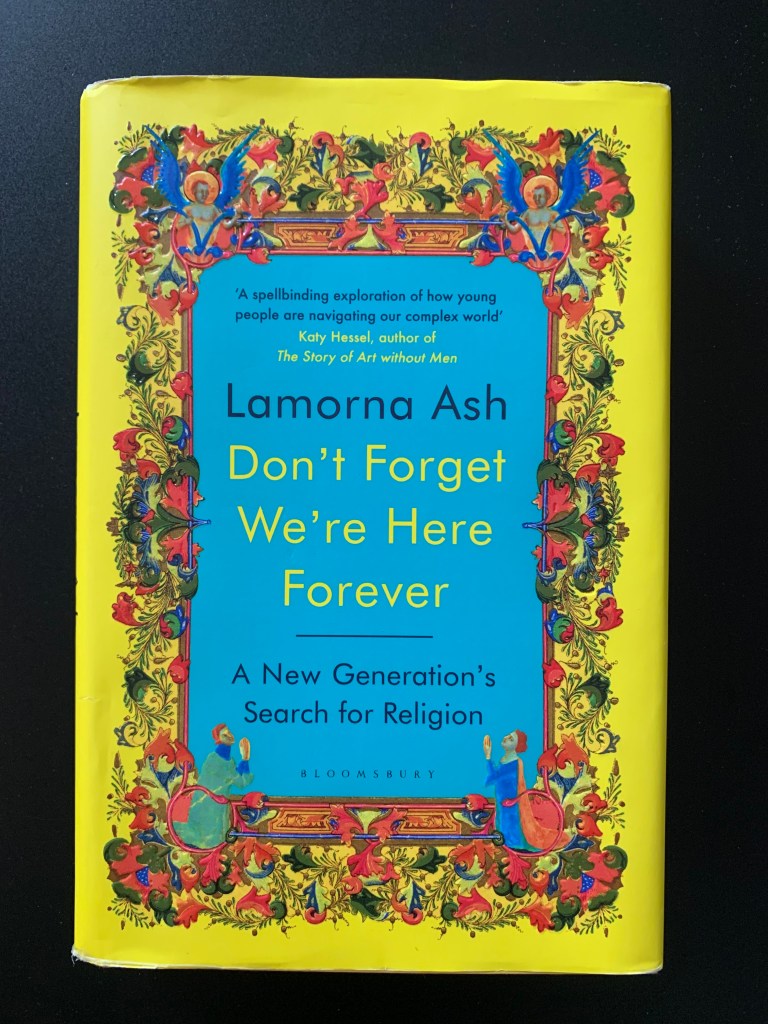
Don’t Forget We’re Here Forever
For now, I’ll say that I think religion is going to play a bigger role in the world as it gets hotter and the water gets higher, and the uglier parts of our nature are forced to the fore.
As for my sense of faith after consuming all this material surrounding God and oblivion: I still don’t believe in a Hollywood ending, in this universe or any other. But I accept this may change.
 Harry Dobbs
Leave a comment