Which words won’t be OK in the future?
And what will be the legacy of the work we do today?
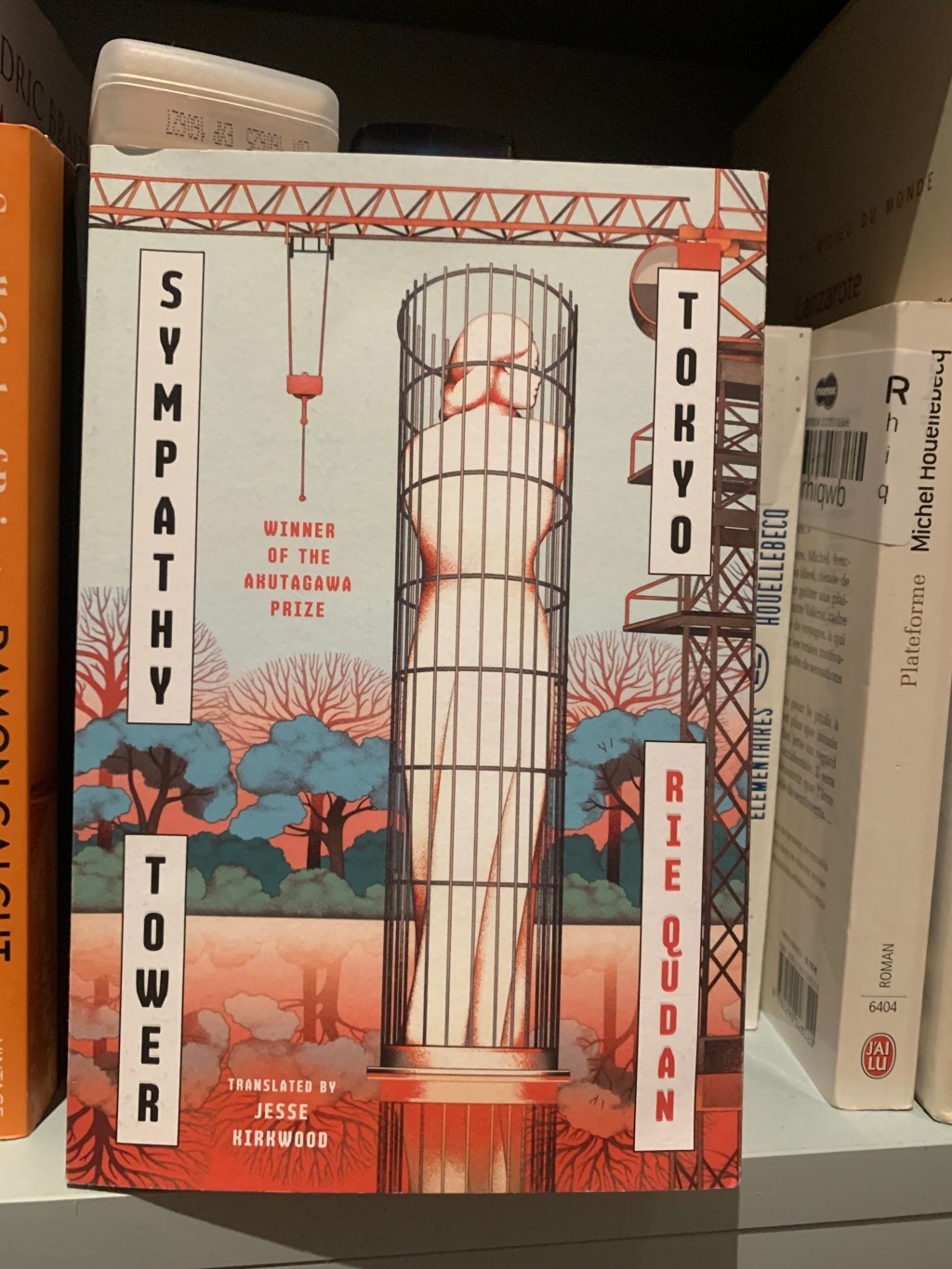
Rie Qudan poses these questions in her novel Sympathy Tower Tokyo, which came out in English this year, translated by Jesse Kirkwood.
It made international headlines because Qudan shared that 5% of the novel was written by AI. This is because large chunks of the novel involve the main character using AI, so in some ways the scandal was over nothing. But from a PR perspective it was a good way to boost media coverage.
The novel is about a prison designed by architect and main character Sara Machina, except it’s not officially called or referred to as a prison. Its name is ‘Sympathy Tower Tokyo’, a modern high rise in the city centre where inmates and guards don’t wear uniforms and the focus is entirely on the residents’ well-being, like an extreme version of those Norwegian prisons we often hear about. One of the tallest buildings in the city, Tokyoites see it every day and are reminded of the people who live in it.
The bureaucrats executing the project choose to avoid the word ‘prison’ when naming or describing anything to do with the tower because there are concerns that the word itself will be seen as insensitive or outdated in the relatively near future.
The mastermind behind the venture is a mostly unseen character called Masaki Seto, a sociologist and ‘happiness scholar’ who refers to convicts as ‘those deserving our sympathy’. Very early in the novel, we learn that architect Sara Machina was assaulted as a young girl, but Qudan never explicitly tells us whether her protagonist agrees with Seto about everyone deserving sympathy.
Machina designs Sympathy Tower largely because it’s the most high-profile job of her career and thus a guarantee of her legacy.
Throughout the story there are references to the Tokyo 2020 Olympics. There was so much excitement, it was going to be one of the best Olympics ever, and then Covid happened and all we remember are empty stadiums and the protests from the Japanese people, many of whom wanted the whole thing cancelled.
We can’t control our legacies; values change, and black swan events can always ruin the things we’ve meticulously planned. Buildings, if not actively destroyed, crumble with time.
I think a lot of people have thoughts at work like “I don’t think this will have the impact we expect” or “I don’t think history will look back on this kindly”. But we carry on because it’s in our personal interest right now.
Sympathy Tower Tokyo won the Akutagawa Prize, one of Japan’s biggest literary prizes. It’s one of the most provocative things I’ve read, both generally about the world today, and also about certain subsets of the desk-working classes that many will recognise, the people that spread new terms and ideas, and gently (or not-so-gently) retire the old ones.
 Harry Dobbs
Leave a comment